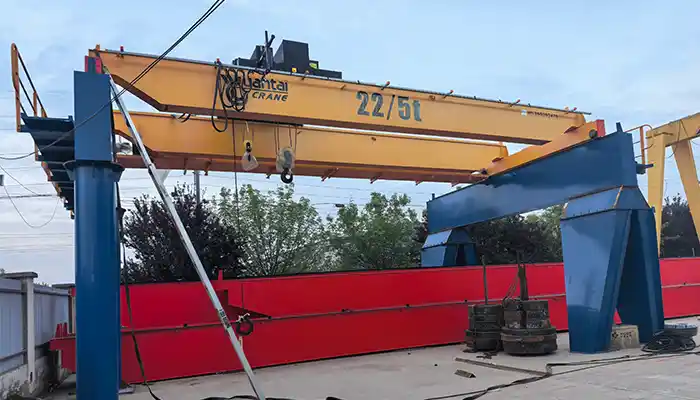
Outdoor Bridge Cranes for Open-Air Production Buyers
menu_open
Content Quick Link
Outdoor Bridge Cranes for Open-Air Production: Standalone Runway Systems Explained for Buyers
Key Takeaways (At a Glance)
Main Insight:
Outdoor bridge cranes with standalone runway systems are a flexible, cost-efficient solution for open-air industrial production. They allow heavy loads to be handled safely and efficiently without relying on a factory or building structure.
Practical Tips for Buyers
- Assess Lifting Needs: Confirm maximum load, lifting frequency, and hoist type before installation.
- Design for Durability: Ensure runways, foundations, and supports can handle wind, rain, and potential corrosion.
- Plan for Future Growth: Leave space for additional cranes, extended runways, or relocated pathways.
- Protect Equipment: Apply weatherproof coatings and install protective covers for hoists, trolleys, and rails to extend service life.
Outdoor Bridge Cranes for Open-Air Production
Outdoor bridge cranes with standalone runway systems are not just "big machines"—they are practical tools for moving heavy loads safely and efficiently in areas where a factory building is not available. These cranes allow industrial operations to continue in open-air yards, assembly areas, or storage sites without the need to construct an entire building around the crane system.
Purpose: Why Outdoor Bridge Cranes Matter
Using an outdoor bridge crane can improve workflow, reduce manual labor, and ensure that production schedules are not delayed due to material handling limitations. The standalone runway structure supports the crane's rails independently, meaning the crane can cover long spans without relying on walls or roof beams. This makes it an ideal solution for steel yards, precast concrete storage, shipping facilities, and outdoor assembly zones.
- Outdoor bridge cranes move heavy loads over open areas without building infrastructure.
- Standalone runway systems provide independent support for crane rails.
- These systems are suitable for industries like steel, construction, shipping, and outdoor assembly.
Audience: Who Benefits from This Guide
This guide is written for professionals who make decisions about lifting equipment and material handling solutions. The content is particularly useful for:
- Plant Managers: Looking to optimize workflow in outdoor yards and storage areas.
- Industrial Crane Buyers: Evaluating crane types, capacities, and layout requirements.
- Logistics Planners: Planning material movement, crane pathways, and safety protocols.
- Production Engineers: Designing open-air production setups where heavy loads must be lifted reliably.
By understanding outdoor bridge cranes, these professionals can plan for safe, efficient, and cost-effective operations, even in sites without indoor facilities.
What Readers Will Learn
- How standalone runway systems work in open-air production.
- Practical considerations for installation and maintenance.
- How to match crane specifications with operational needs.
Overview: What This Guide Covers
The rest of this article dives into every detail you need to make informed decisions about outdoor bridge cranes. Unlike generic articles, it focuses on practical, real-world applications and challenges.
- Design Considerations: Choosing the right span, height, and load capacity for outdoor conditions.
- Installation Requirements: Foundations, steel structures, and power supply for standalone runways.
- Applications: Industries and scenarios where outdoor cranes are the most efficient solution.
- Operational Benefits: Flexibility, safety, and productivity improvements.
- Maintenance and Longevity: Tips to keep cranes performing reliably outdoors, including protection against corrosion, wind, and rain.
By the end, you will understand how to evaluate, select, and implement an outdoor bridge crane system that fits your site and workflow requirements.
What Is an Outdoor Bridge Crane?
An outdoor bridge crane is a heavy-duty lifting system designed specifically for operations outside of traditional factory buildings. Unlike indoor overhead cranes that rely on a building's roof or walls for support, outdoor bridge cranes operate on independent structures or standalone runway systems. They are capable of moving heavy materials horizontally across open spaces, covering large production yards, storage areas, or assembly zones efficiently.
Definition: Practical Heavy Lifting in Open-Air Environments
These cranes are not just larger versions of indoor cranes—they are engineered to handle environmental factors such as wind, rain, and temperature variations while maintaining safe and reliable lifting performance.
- Move heavy loads across open-air production or storage areas.
- Operate independently of building structures using standalone runway supports.
- Facilitate faster material handling compared to forklifts or mobile cranes in large outdoor spaces.
Core Components of an Outdoor Bridge Crane
Understanding the main parts of an outdoor bridge crane helps buyers plan for installation, operation, and maintenance. Each component plays a critical role in safe and efficient lifting.
- Bridge Girder: The main horizontal beam that spans the working area. Carries the hoist and trolley across the rails.
- Trolley: Moves along the bridge girder and carries the hoist, allowing precise horizontal positioning of loads.
- Hoist: The lifting mechanism, which can be a wire rope hoist, electric chain hoist, or specialized weatherproof hoist for outdoor use.
- End Trucks: Wheels or rollers at each end of the bridge girder that allow the crane to travel along the runway rails.
- Rails Supported by Standalone Runway Structures: Independent steel or concrete structures that carry the crane along its path without requiring a building for support.
Each component must be selected and designed based on the crane's span, lifting capacity, and operational environment to ensure safety and longevity.
Practical Notes for Buyers
- Outdoor bridge cranes are ideal for open-air material handling, especially where constructing a full factory is not cost-effective.
- Proper hoist selection is critical—wire rope hoists are commonly used for heavy-duty outdoor work, while electric chain hoists may be suitable for lighter loads.
- Runway design must account for environmental loads, including wind pressure, uneven terrain, and potential ground settlement.
Standalone Runway Systems
A standalone runway system is a self-supporting steel structure that carries the rails for an outdoor bridge crane without relying on walls, roof beams, or any existing building. Essentially, it allows a crane to operate fully outdoors while maintaining stability, safety, and precise movement along its path.
Definition: Independent Support for Outdoor Cranes
These systems are common in steel yards, precast concrete storage areas, shipping facilities, and other open-air industrial operations where constructing a building is not feasible or cost-effective. By supporting the crane independently, standalone runways provide flexibility in layout, future expansion, and operational efficiency.
- Supports crane rails completely independently.
- Engineered to handle outdoor loads, including crane weight, material weight, and environmental forces.
- Allows industrial operations to be set up in open-air production areas without constructing a factory or warehouse.
Key Features of Standalone Runway Systems
When considering a standalone runway, buyers need to understand the design elements that make it both safe and practical:
- Adjustable Steel Columns: Height and span can be customized to match the crane's working area, production layout, and load requirements.
- Full Rated Load Design: Structures are engineered to carry the crane's maximum safe working load along with dynamic forces from movement and lifting operations.
- Strong Foundations: Rails are anchored to reinforced concrete pads or ground foundations, ensuring stability even under heavy loads and outdoor conditions.
- Durable Materials: High-quality structural steel with corrosion protection is often used to withstand weather exposure, wind, and temperature fluctuations.
These features make standalone runway systems a reliable choice for outdoor lifting solutions while providing long-term durability.
Advantages of Standalone Runway Systems
Standalone runways offer practical benefits that make them a preferred solution for open-air crane operations:
- No Need for Factory Buildings: Eliminates the cost and time of constructing walls, roofs, and indoor support structures.
- Flexible Layout: Runways can be designed and positioned according to current operational needs and can be reconfigured if production areas change.
- Scalable for Future Expansion: Additional cranes can be added along the runway, or longer spans can be installed as production requirements grow.
- Faster Installation and Cost-Efficient: Installing a standalone runway is generally quicker and less expensive than building a full facility to support indoor cranes.
Practical Tip for Buyers: When planning for standalone runways, account for wind loads, seismic considerations, and local ground conditions, as these factors directly affect foundation design and structural stability.
Applications of Outdoor Bridge Cranes
Outdoor bridge cranes with standalone runway systems are not just heavy machinery—they are practical solutions for moving large loads efficiently in open-air production areas. Let's break down where they are used and why they are often the preferred choice.
Key Industries and Use Cases
Outdoor cranes are widely applied in industries that need heavy material handling without relying on indoor facilities. Typical examples include:
a. Steel and Metal Industry
- Transporting steel slabs, coils, and billets.
- Managing materials in steel yards, fabrication zones, or storage areas.
- Handling large, heavy items that forklifts cannot efficiently move.
b. Construction Yards
- Lifting precast concrete panels, beams, and other structural elements.
- Supporting outdoor assembly and staging areas for construction projects.
- Enabling fast, organized material placement for projects under tight timelines.
c. Shipping and Logistics
- Loading and unloading containers and oversized cargo in ports or storage yards.
- Providing smooth, repeatable movement along long outdoor spans.
- Reducing reliance on cranes that require indoor enclosures.
d. Machinery Assembly
- Moving large machine components or equipment outdoors.
- Supporting modular assembly operations or maintenance tasks.
- Ideal for areas where indoor space is limited or unavailable.
Why Buyers Choose Outdoor Bridge Cranes
When deciding between indoor and outdoor crane systems, many industrial buyers turn to outdoor bridge cranes. The reason is simple: they solve practical problems that indoor cranes cannot. Here's why they are preferred in open-air production settings.
Limited or No Indoor Space
Many industrial sites simply don't have buildings large enough for indoor overhead cranes. Outdoor bridge cranes provide a solution that works without walls or a roof.
- Ideal for steel yards, construction sites, and shipping yards where open space is the norm.
- No need to compromise crane span or lifting capacity to fit within a building footprint.
Flexible Movement Paths
Standalone runway systems give cranes freedom to move along multiple lifting points, making them highly adaptable to production needs.
- Cranes can travel long spans without being restricted by columns or walls.
- Operators can lift and position materials precisely where needed, even over large open areas.
- Layouts can be adjusted or expanded as production requirements change.
Cost and Time Savings
Outdoor bridge cranes can reduce both upfront costs and installation time compared to indoor solutions.
- No need to build a factory or enclosed structure to support the crane.
- Installation is generally faster, allowing operations to start sooner.
- Easier to expand or relocate the crane system in the future as production grows.
Practical Tip for Buyers
Plan ahead for future needs. Outdoor bridge cranes are easier to extend or add additional units along the same runway. Thinking ahead can save time and money down the road.
Design and Installation Considerations
Designing and installing an outdoor bridge crane with a standalone runway requires careful planning. A poorly designed setup can cause safety issues, operational delays, or costly repairs. This section covers the practical factors buyers need to consider for safe and efficient crane operation.
Load and Capacity Planning
Before selecting a crane or designing the runway, you need a clear understanding of what the system will handle.
- Safe Working Load (SWL): Ensure the crane can lift the maximum expected weight, plus a safety margin.
- Trolley Speed: Consider how fast loads will move horizontally; higher speeds may require stronger structural support.
- Dynamic Load Factors: Account for sudden stops, acceleration, and swinging loads. Outdoor conditions like wind can add additional forces that the crane structure must withstand.
Practical Tip: Always consult with a structural engineer or experienced crane supplier to calculate total load, including dynamic and environmental factors.
Span and Height Selection
The crane's reach determines how effectively it can cover your production or storage area.
- Span: The distance between runway rails must allow the crane to access all required areas without obstruction.
- Height: Ensure there's enough clearance above the load for safe lifting and lowering.
- Future Expansion: Consider potential growth in production areas so the runway can accommodate longer spans or additional cranes.
Practical Tip: Measure your site carefully, including obstacles like nearby buildings, equipment, or overhead structures, even if the area is open-air.
Foundation Requirements
A solid foundation is critical for safety and durability. Outdoor crane runways are anchored to reinforced concrete pads or piers designed to handle heavy loads.
- Foundations must resist environmental factors like rain, freezing, or shifting soil.
- Concrete pads should be level and properly reinforced to prevent settlement under heavy dynamic loads.
- For areas with soft or uneven ground, additional reinforcement or pilings may be required.
Practical Tip: Soil testing before installation can prevent unexpected settlement issues later.
Power Supply and Cabling
Providing electricity safely to an outdoor crane requires careful planning.
- Options include overhead power rails, festoon systems, or ground-level cabling, depending on crane travel length and site layout.
- Ensure cables and connectors are rated for outdoor use and protected against rain, dust, and UV exposure.
- Plan for sufficient voltage and phase requirements to support the crane's hoist and trolley motors.
Practical Tip: Regularly inspect outdoor power systems for wear, corrosion, or loose connections, especially in high-moisture environments.
Maintenance and Durability
Outdoor conditions accelerate wear, so maintenance planning is essential for long-term performance.
- Anti-Corrosion Coatings: Use weather-resistant paint or galvanization for bridge girders, runway rails, and support structures.
- Protective Hoist Covers: Shield hoists and trolleys from rain, dust, and debris.
- Routine Inspections: Check for loose bolts, corrosion, alignment issues, and wear on moving parts.
- Lubrication: Regularly lubricate trolley wheels, hoist gears, and other moving components exposed to outdoor conditions.
Practical Tip: Set up a maintenance schedule based on the crane's workload, environmental exposure, and manufacturer recommendations.
Cost and Efficiency Insights
Outdoor bridge cranes with standalone runway systems are not just functional—they can save time and money while improving workflow. Understanding these benefits helps buyers make informed decisions.
Cost Benefits
One of the main reasons buyers choose outdoor bridge cranes is the reduced upfront investment.
- No Need for a Full Factory: Standalone runway systems eliminate the significant cost of building a full facility.
- Lower Initial Investment: Steel structures and foundations are generally less expensive than constructing an indoor support building.
- Long-Term Savings: Reduced construction costs allow investment in higher-quality crane components or additional hoists.
Practical Tip: Compare the total cost of building a facility versus installing a standalone crane runway; outdoor systems often pay for themselves quickly.
Time Savings
Outdoor crane systems can often be installed faster than indoor alternatives.
- Quicker Installation: Standalone runways can be assembled on-site without waiting for a building to be completed.
- Early Operations: Production can start sooner since cranes are operational as soon as foundations and runways are ready.
Practical Tip: Prepare site foundations in advance to maximize the time advantage of outdoor installations.
Operational Flexibility
Outdoor bridge cranes offer unmatched adaptability for changing production needs.
- Easier Relocation: Runway cranes can be extended, relocated, or combined with additional cranes as production areas grow.
- Multiple Lifting Points: They allow customized paths and coverage that indoor systems may not support.
- Scalable Design: Runway structures can be extended in the future without major redesigns.
Transportation Considerations
Shipping and assembling outdoor crane components is generally simpler than indoor systems.
- Component Transport: Bridge girders, hoists, and runway sections can be delivered and assembled on-site with minimal disruption.
- Reduced Site Preparation: No indoor space constraints allow cranes to be installed exactly where needed.
Practical Tip: Order modular crane components that can be transported and installed in sections to save time and reduce costs.
Practical Tips for Buyers
Buying and installing an outdoor bridge crane requires careful planning to ensure safety, efficiency, and long-term performance. These tips help buyers make the right decisions.
Confirm Lifting Requirements
Understand exactly what the crane will lift before anything else.
- Maximum Load per Lift: Know the heaviest item you will move, including safety margins for dynamic loads.
- Frequency of Lifts: High-frequency operations may require more durable hoists and trolleys.
- Special Requirements: Account for materials that are hot, wet, or require special clamps, grabs, or slings.
Practical Tip: Document all lifting scenarios and share them with your supplier to ensure proper SWL and hoist selection.
Choose the Right Hoist
The hoist is the heart of the crane, and outdoor conditions affect its performance.
- Wire Rope Hoists: Ideal for heavy loads and long spans.
- Electric Chain Hoists: Suitable for lighter loads and shorter spans.
- Weatherproof Hoists: Protective covers or corrosion-resistant materials improve durability outdoors.
Practical Tip: Prioritize weatherproofing in rain, high humidity, or coastal areas over cost savings.
Assess Span, Height, and Runway Layout
Proper positioning ensures maximum productivity and safety.
- Span: Ensure the crane can reach all necessary areas without overextending.
- Height: Allow enough clearance for lifting, lowering, and potential obstructions.
- Runway Layout: Check for obstacles such as storage racks, vehicles, or uneven terrain that could affect travel or safety.
Practical Tip: Visualize the full workflow on-site before finalizing the crane layout to avoid costly modifications later.
Protect Cranes for Outdoor Conditions
Exposure to weather can accelerate wear and reduce reliability.
- Weatherproof Coatings: Anti-corrosion paint or galvanization on girders, rails, and supports.
- Protective Covers: Shield hoists and trolleys from rain, dust, and debris.
- Regular Maintenance: Inspect moving parts, tighten bolts, lubricate gears, and monitor alignment frequently.
Practical Tip: Schedule routine inspections at least quarterly, more often in harsh climates.
Plan for Future Expansion
Industrial operations evolve over time. Your crane system should be able to grow with you.
- Design runways that can accommodate additional cranes or longer spans.
- Keep space around the crane for potential relocation or new lifting zones.
- Factor in future production needs when selecting hoist capacity and structural design.
Practical Tip: Investing in adaptable infrastructure upfront can save significant costs later.
Cases of Outdoor Bridge Cranes
Real-world examples show how outdoor bridge cranes with standalone runways solve practical lifting challenges, improve workflow, and enhance operational efficiency.
Reference 1: Steel Mill – 15-Ton Outdoor Bridge Crane
A large steel mill needed a solution to move heavy billets and steel slabs across an open storage yard without constructing a building.
- Crane Type: 15-ton outdoor bridge crane
- Runway: Standalone steel structure spanning the full storage yard
- Application: Lifting billets and slabs from storage to processing areas
Benefits Achieved:
- Efficient Material Handling: Reduced manual handling and improved workflow speed.
- Cost Savings: No factory or enclosed building needed to support crane operations.
- Flexibility: Crane layout allowed easy access to multiple storage rows, with runway extendable for future expansion.
Practical Tip for Buyers: When handling heavy steel products outdoors, confirm that the crane and runway are designed for full rated load and dynamic forces caused by long slabs or bundled billets.
Reference 2: Precast Concrete Yard – Multiple 10-Ton Cranes
A precast concrete supplier needed to stack and organize panels and beams in a large outdoor yard efficiently. Multiple cranes were required to operate simultaneously without indoor structures.
- Cranes: Three 10-ton outdoor bridge cranes
- Runway: Independent steel runways covering the full yard
- Application: Moving and stacking precast concrete panels, beams, and columns
Benefits Achieved:
- Optimized Workflow: Cranes could operate independently or in sequence to manage high-volume storage efficiently.
- No Building Constraints: Runways provided full coverage without a roof or walls.
- Future Expansion: Layout allows additional cranes or extended runways as production grows.
Practical Tip for Buyers: For precast yards or outdoor storage areas, design crane pathways to minimize travel distances and avoid obstacles, ensuring smooth stacking and retrieval.
Summary of Case Lessons
- Standalone runways allow outdoor crane systems to operate without buildings.
- Heavy material handling outdoors can be efficient, safe, and cost-effective with proper crane selection and layout.
- Planning for expansion and flexible travel paths is critical for long-term operations.
FAQ: Outdoor Bridge Cranes with Standalone Runways
Common questions buyers have about outdoor bridge cranes, standalone runways, and practical considerations for open-air operations.
Q1: How can heavy loads be lifted outdoors without a factory building?
A: Outdoor bridge cranes with standalone runway systems are designed to operate independently of walls or roofs. The crane runs on rails supported by self-standing steel structures, allowing heavy materials—like steel slabs, concrete panels, or machinery—to be moved safely across open-air production yards. This eliminates the need to construct a full building while maintaining safe and efficient lifting.
Q2: What are the advantages of a standalone crane runway system?
A: Standalone runways provide independent support for crane operations, offering several practical benefits:
- Flexibility in layout and crane positioning.
- Ability to extend or relocate runways as production needs grow.
- Faster and more cost-efficient installation compared to building an indoor crane facility.
- Full load capacity support for heavy-duty operations.
Q3: How should installation, maintenance, and environmental challenges be managed in open-air operations?
A: Outdoor cranes are exposed to wind, rain, sun, and other environmental factors, so proper planning is essential:
- Foundations should be reinforced concrete pads or piers, designed for outdoor loads.
- Use anti-corrosion coatings on steel components and protective covers for hoists and trolleys.
- Schedule routine inspections and lubrication to maintain safe operation.
- Plan cabling and power delivery suitable for outdoor use, protecting against moisture and wear.
Q4: Which industries benefit most from outdoor bridge cranes?
A: Outdoor bridge cranes are widely used in industries where heavy materials need to be handled in open-air settings, including:
- Steel and metal yards: Handling billets, slabs, and coils.
- Construction and precast concrete yards: Moving beams, panels, and columns.
- Shipping and logistics: Loading containers and heavy cargo in ports.
- Machinery assembly: Lifting large equipment or components outdoors.
Conclusion
Outdoor bridge cranes with standalone runway systems provide a practical and cost-effective solution for industrial operations in open-air environments. They combine strength, flexibility, and efficiency, allowing heavy materials to be lifted and moved safely without the need for expensive factory buildings or enclosed spaces.
Key Takeaways for Buyers:
- Standalone runways let cranes operate independently, covering large yards or storage areas.
- Outdoor systems reduce construction costs while maintaining safe lifting capacity.
- Flexibility in layout and expansion ensures the crane system can grow with your production needs.
- Proper planning for environmental exposure, load requirements, and foundation stability is critical for long-term performance.
Actionable Advice:
- Assess your actual lifting needs, maximum loads, and the frequency of operations.
- Consider site-specific factors like terrain, weather, and clearance requirements.
- Choose hoist types and protective measures suitable for outdoor conditions.
- Plan for future expansion or additional cranes to avoid costly redesigns later.
By carefully evaluating your requirements and working with experienced crane suppliers, you can design an outdoor bridge crane system that delivers reliable, efficient, and safe material handling for years to come.

Article by Bella ,who has been in the hoist and crane field since 2016. Bella provides overhead crane & gantry crane consultation services for clients who need a customized overhead travelling crane solution.Contact her to get free consultation.